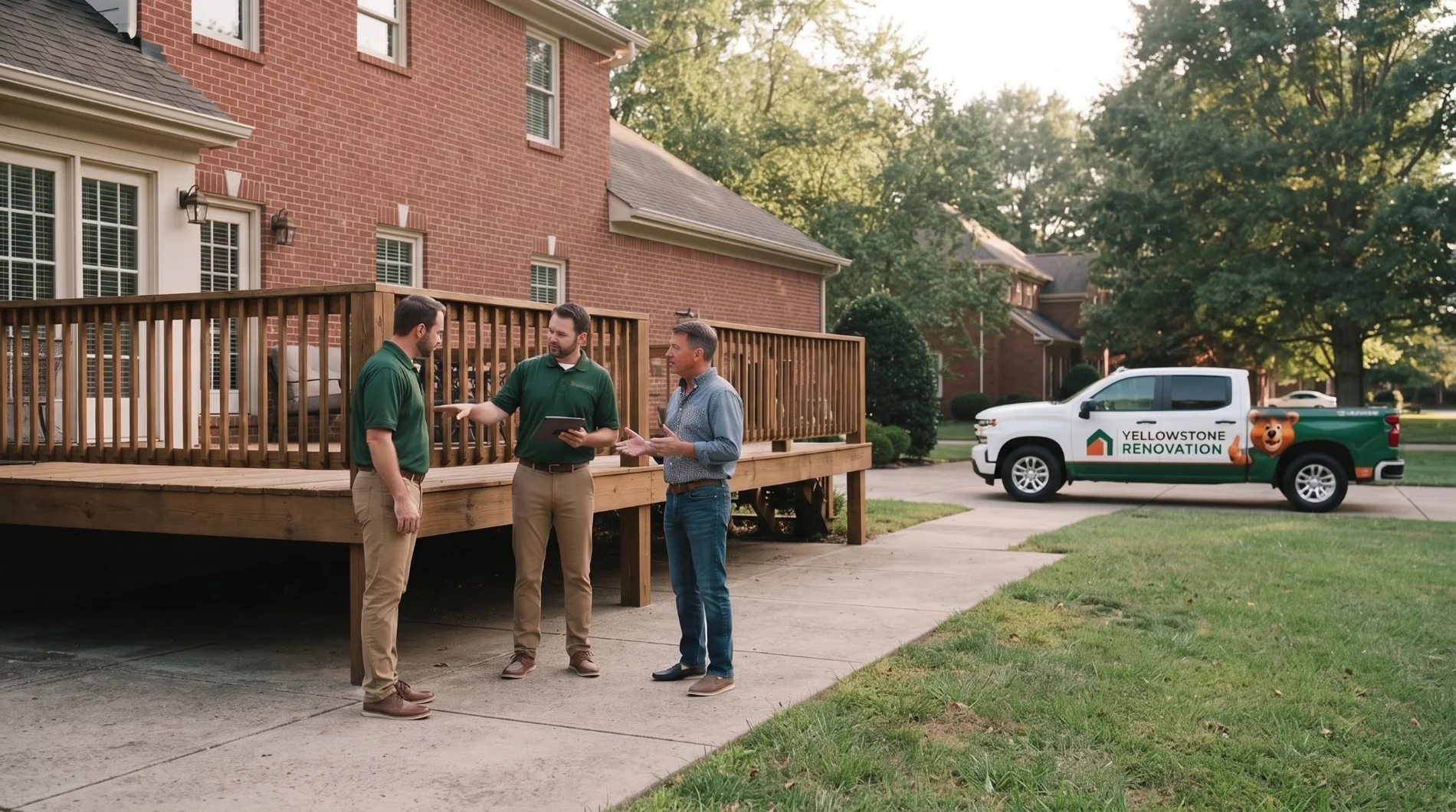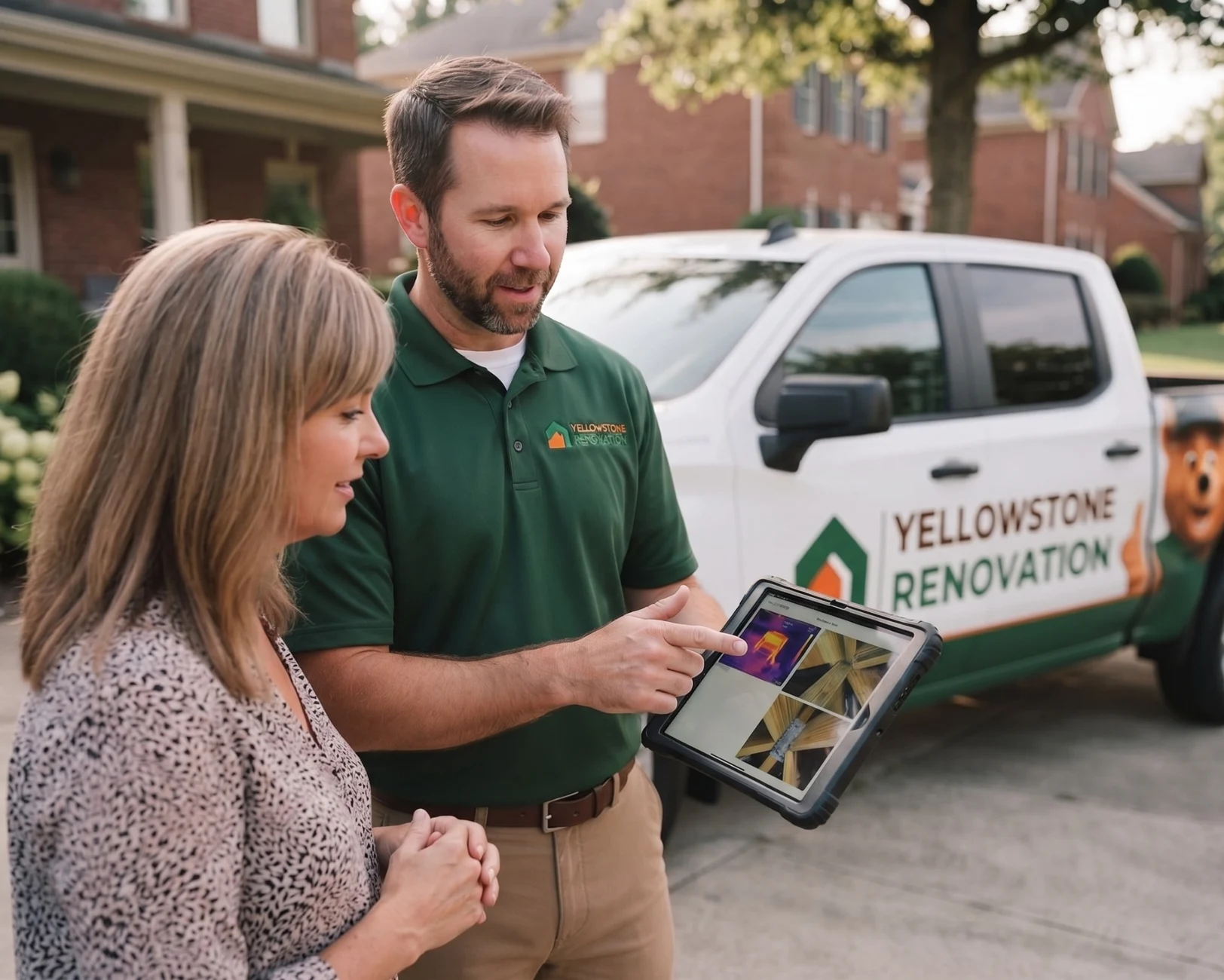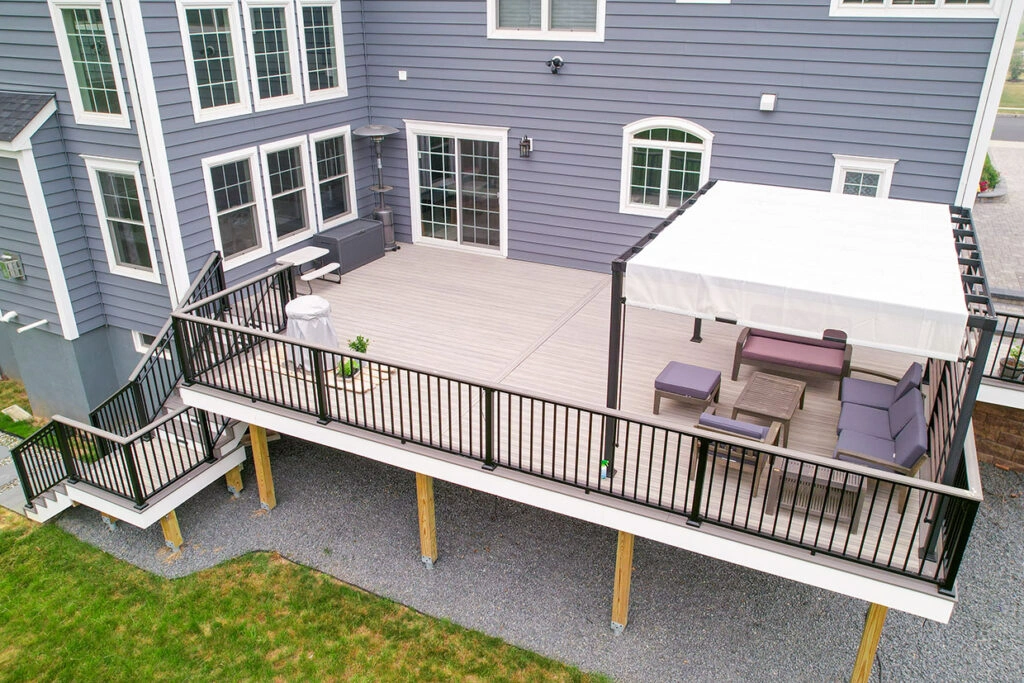
Notice changes without testing the structure
Record staining, damaged boards, missing parts, and movement you have already noticed. Take photos from a safe place. Do not lean on suspect railings, crawl into unsafe areas, or load a deck to prove a concern.
Planning your next step? Our guide explains how to prepare for a deck assessment so you can prepare a clearer request.
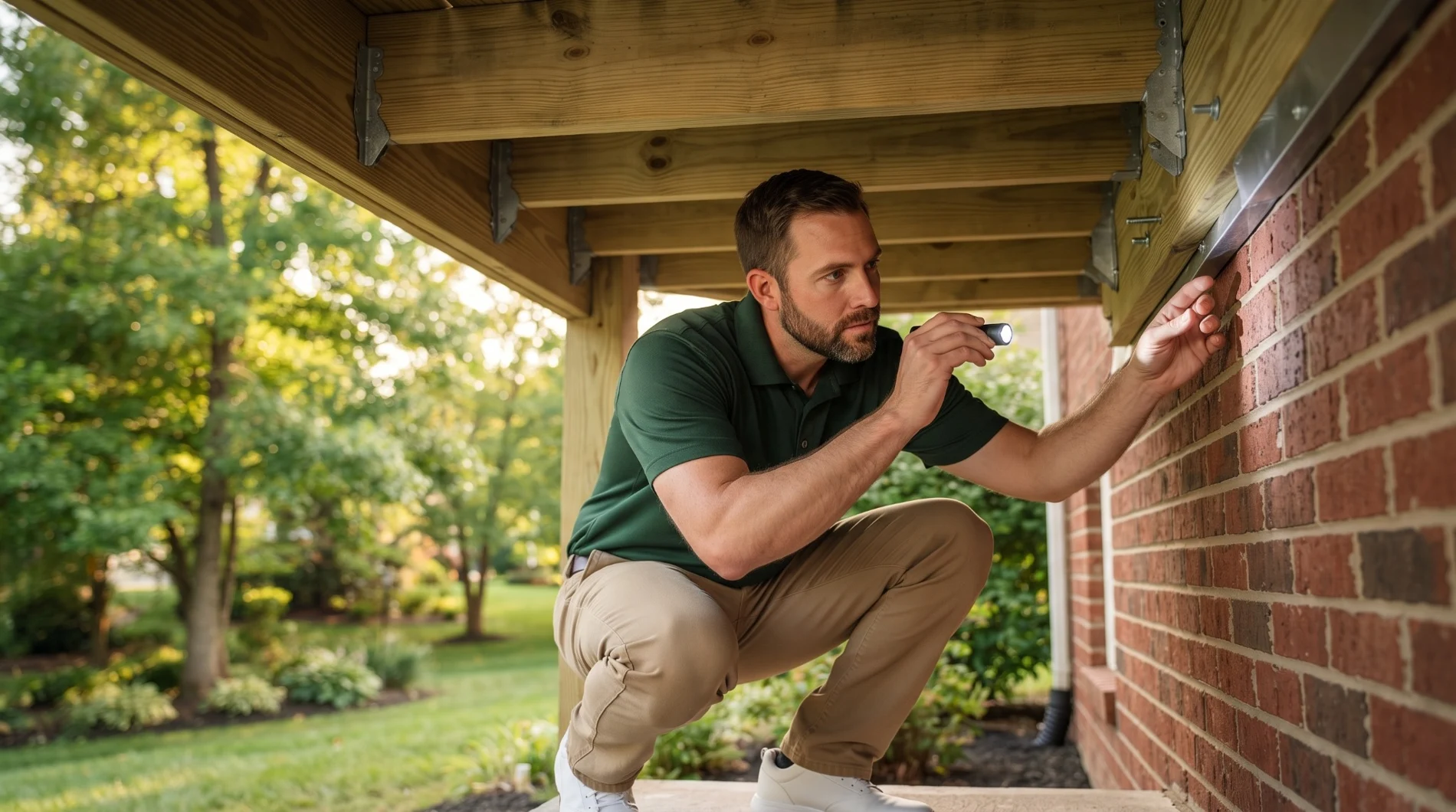
Look beyond the new surface
New boards can improve appearance while concealing older framing below. Before resurfacing, discuss access to the supports and connections and ask which components are being retained.
Keep water-management details in the conversation
The house connection, flashing transitions, board gaps, and water paths are useful topics during an assessment. Visible staining may justify investigation, but it does not reveal every concealed condition.
Compare estimates by scope
Compare demolition, materials, fasteners, rails, stairs, trim, cleanup, design, and permit responsibilities. Two totals may cover very different work. Ask how changes will be documented if concealed damage is found.
Know which report you need
An insurer, buyer, engineer, or building department may ask for a specific document. Confirm the scope and signer’s credentials before booking. A contractor assessment supports repair planning; it is not a structural certification.
LET’S TALK ABOUT YOUR PROPERTY
Request an Inspection
A few details to start the conversation.